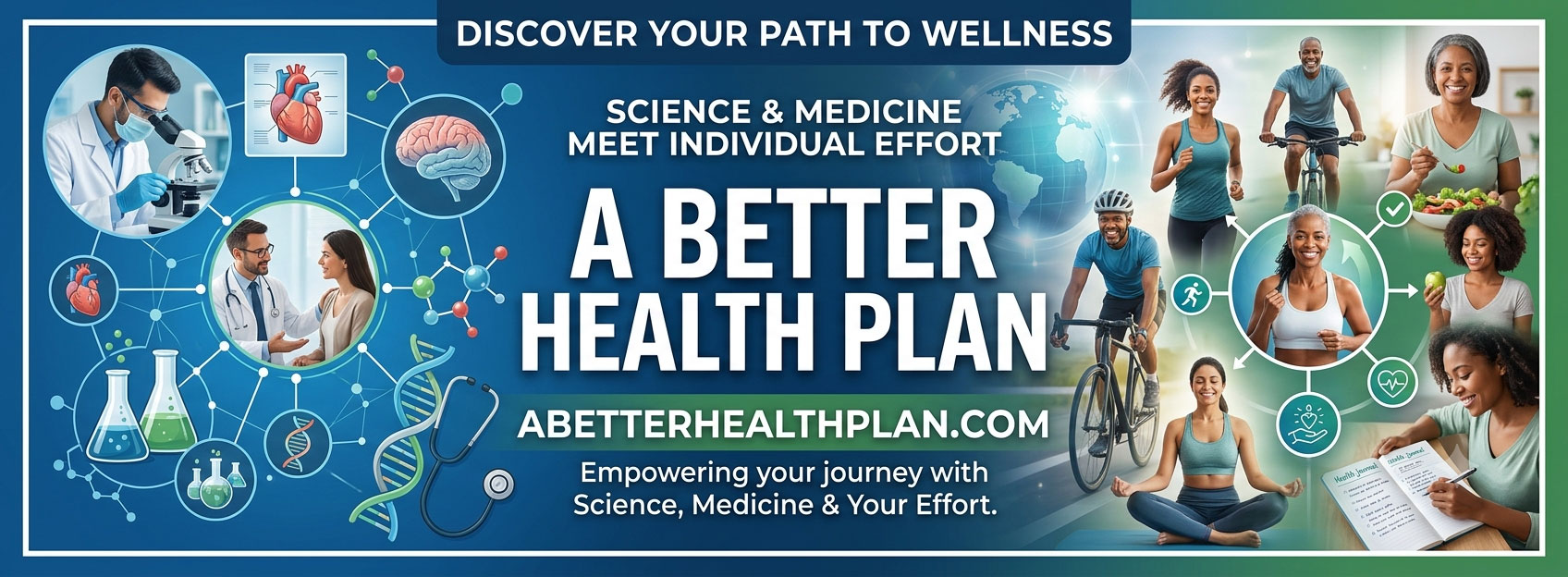
Learn how nutrition, exercise, sleep, stress management and informed healthcare decisions
can help you take a more active role in your health.
A Healthy Body
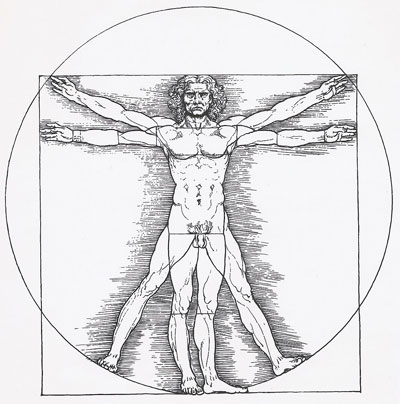
Your body is perhaps the most important and complex organism God created and put on planet Earth. It is made up of billions of microscopic parts, each working together in an organized fashion that allows the total being to function.
How well each of those parts work together might define how healthy your body is.
It is through maintaining or improving the efficiency of our body and keeping its various systems in balance that health is maintained.
The Wikipedia Encyclopedia defines “Health” as the level of functional and/or metabolic efficiency of an organism at both the micro(cellular) and macro(social) level. In the medical field, health is commonly defined as an organism’s ability to efficiently respond to challenges (stressors) and effectively restore and sustain a “state of balance,” known as homeostasis.
Your health is too important to leave entirely to the healthcare system.

I believe it should be one of your top priorities to take care of your body as best you can. After all, you only have ONE body and when it’s gone… it’s gone.
A Better Health Plan provides educational resources to help you better understand your body, make informed lifestyle choices, and have more productive conversations with qualified healthcare professionals.
While science and the practice of medicine is important to our health, perhaps the most important factors are impacted through your individual effort.
Examples of things in your control that can improve your health.
Modern Health Care System
While modern healthcare is excellent at handling emergencies and acute illness, you can put yourself in a much better position by needing it less often. Modern medicine excels at crisis care, but it cannot do the daily work of health for you.
If your day starts with a fistful of pills, it’s a sign something deeper needs attention. Medication can hide symptoms, but it can’t fix the cause.
The most powerful way to improve your health is to take personal responsibility for the daily choices that drive long-term health. Pills can be life-saving and necessary for many conditions, but they work best when combined with foundational habits — a nutrient-dense diet, regular movement, healthy weight, quality sleep, and stress management.

A Better Approach: Prevention
It would appear that chronic conditions like heart disease, obesity, autism, and type 2 diabetes have continued to rise, not because doctors don’t care, but because our modern environment makes healthy choices harder. Highly processed foods, sedentary jobs, and chronic stress all work against us.
It’s been estimated that more than 50% of us die from cardiovascular disease. Cancer affects a significant portion of the population and an increasing percentage of us suffer from life threatening infectious diseases.
These conditions can be preventable when you take an active role in your body’s health.
Taking personal control over your health will become even more important in the coming years. Your healthcare is being industrialized and socialized which will decrease your quality of care while skyrocketing the costs. Make no mistake about it… there are billions of dollars at stake and the medical industrial complex wants to control all of it.

Lessons Learned from Coronavirus
The COVID-19 pandemic was a reminder of how important foundational immune health is. Research shows that many Americans have risk factors — such as poor diet, lack of activity, inadequate sleep, and chronic stress — that can make it harder for the body to fight off infections.
Perhaps one positive outcome of the Covid-19 pandemic is a renewed focus on personal responsibility and common-sense hygiene — practices that help with many contagious illnesses, from the common cold to seasonal flu.

The mission of this website is to…
provide you information and resources that will empower you to make more healthy lifestyle choices. As you become better informed about health issues related to your body and gain access to resources to improve your health, you will be empowered to make the choices necessary to improve your overall quality of life.
I’m not a doctor — and I don’t pretend to be. I’m a researcher, a writer, and someone who believes deeply in personal responsibility and informed decision-making.
For more than two decades, I’ve studied how nutrition, movement, and lifestyle choices shape long-term health. What I discovered is simple: most people aren’t sick because they lack access to information. They’re sick because the information they do get is incomplete, confusing, or influenced by systems that don’t prioritize individual well-being.
This site was created to change that.