Finding The Most Suitable CPAP Machine Masks
CPAP therapy is the standard treatment for sleep apnea, including obstructive sleep disorder (OSD). While it doesn’t correct underlying medical conditions such as coronary heart disease, it does provide meaningful, temporary relief by keeping the airway open during sleep.
The therapy uses a CPAP machine along with accessories like flexible tubing and a mask that delivers pressurized air. Although the mask is technically just an accessory, it’s often the biggest reason patients struggle with compliance. Masks can look bulky, feel uncomfortable, and leak if they don’t fit properly. That’s why proper mask fitting is essential — a well-fitted mask makes CPAP therapy easier, more comfortable, and far more effective.
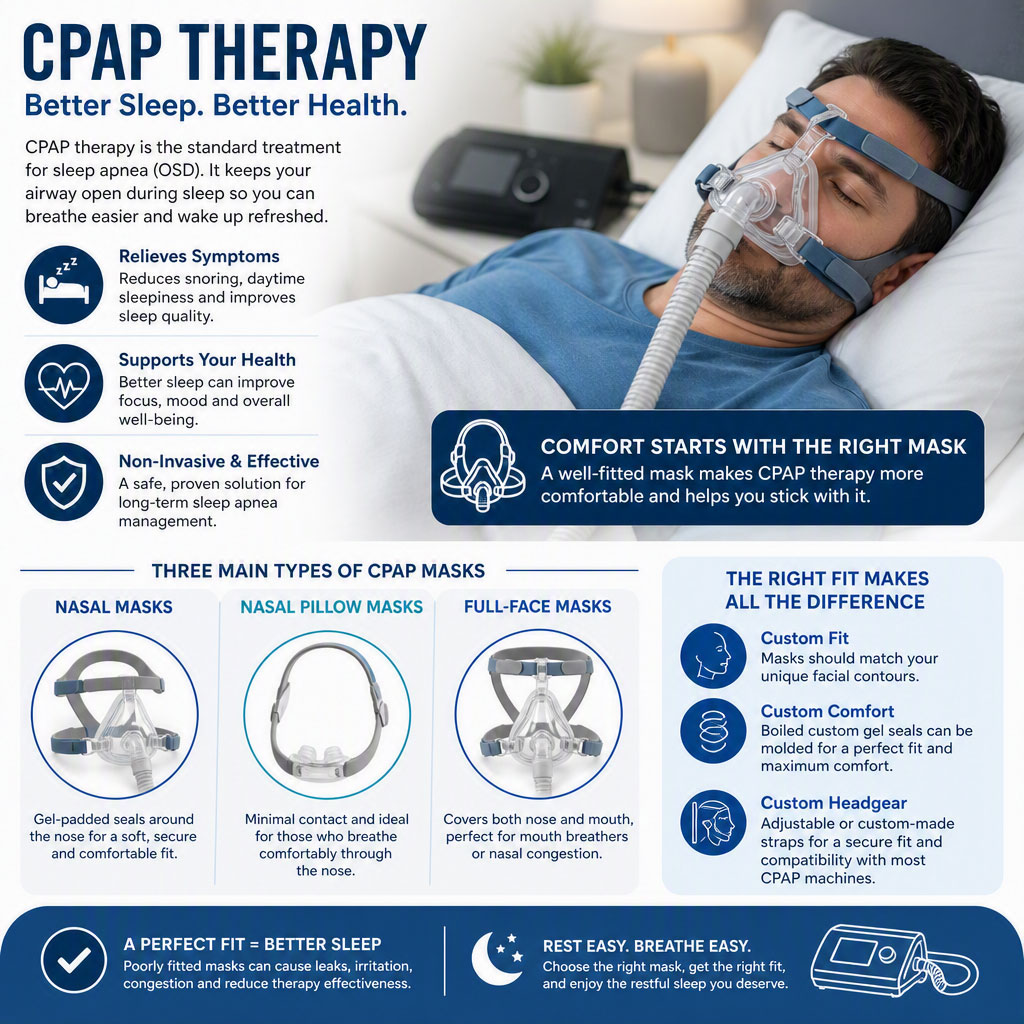
Ideally, CPAP masks should be customized to fit the user’s facial contours. Below are three common types available today:
- CPAP Nasal Masks – These feature gel-padded seals around the nose. They’re soft, secure, and stay in place even when you move.
- CPAP Nasal Pillow Masks – Best for users who prefer minimal contact and breathe comfortably through the nose.
- CPAP Full-Face Masks – Larger masks that cover both the nose and mouth, allowing mouth breathing without losing pressure.
When choosing a CPAP mask, proper fitting is crucial. If a commercial mask doesn’t feel comfortable, custom options are available. Boiled custom gel can be molded to match your facial shape, and headgear straps can be tailored for personal comfort or universal compatibility with most CPAP machines.
Popular full-face options include the ResMed Ultra Mirage Full Face Mask and the Respironics ComfortFull 2 Full Face Mask. Poorly fitted masks can lead to allergies, congestion, runny nose, and general discomfort — all issues that disrupt sleep and reduce compliance.
Whether you choose a commercial or custom mask, make sure it fits perfectly. A snug, comfortable fit is the key to restful sleep and successful CPAP therapy.