How Sleep Apnea Increases Your Risk of Heart Disease
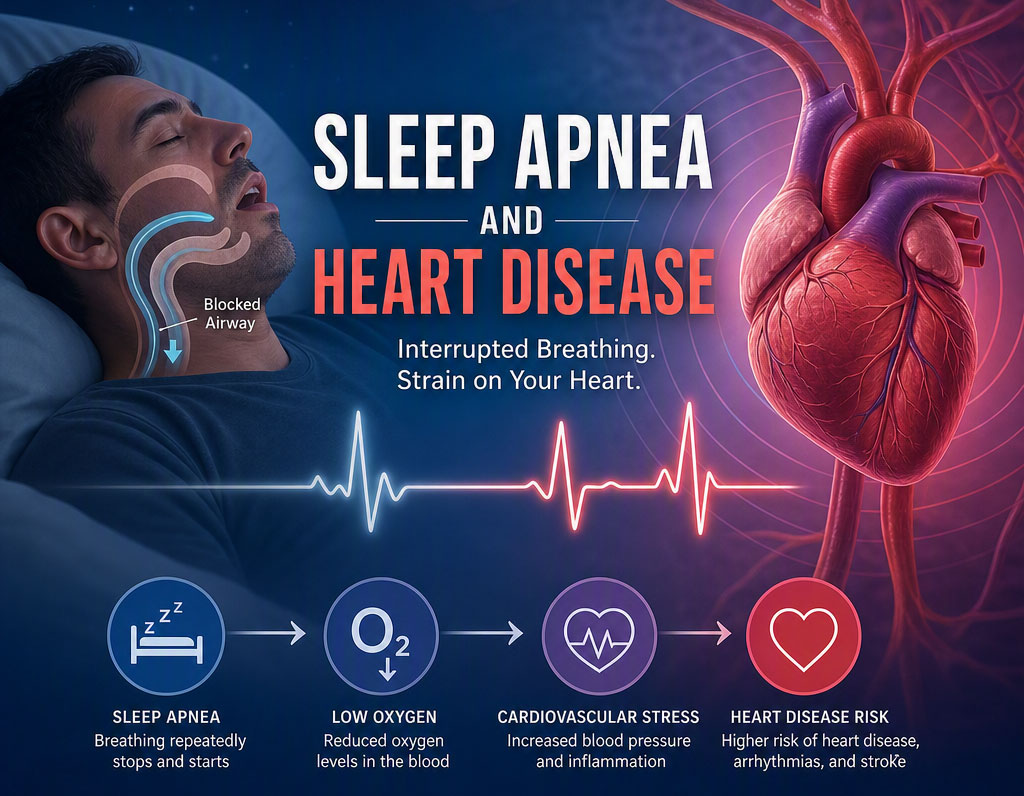
Sleep apnea and heart disease are two rapidly rising health concerns, and researchers now recognize a powerful link between them. Although this connection has only been widely understood in the past decade, it’s considered one of the most significant discoveries in modern health science.
What Is Sleep Apnea?
Sleep apnea is a serious sleep disorder in which a person repeatedly stops breathing during sleep. These pauses can last seconds or even minutes, disrupting oxygen flow and placing stress on the body.
The most common form—obstructive sleep apnea (OSA)—occurs when the airway becomes blocked during sleep. Even though the person attempts to breathe, airflow is restricted. As oxygen levels drop, breathing eventually resumes with a loud gasp, snort, or choking sound.
How Sleep Apnea Increases Your Risk of Heart Disease
Research now shows that sleep apnea is a major underlying contributor to heart disease (American Heart Association). Studies reveal strong associations between obstructive sleep apnea and:
- Hypertension (high blood pressure)
- Heart failure
- Stroke
- Ischemic heart disease
Even individuals with normal blood pressure are at increased risk. In fact, people with untreated sleep apnea often develop high blood pressure within just a few years.
Why Sleep Apnea Increases Your Risk of Heart Disease
Sleep apnea triggers a chain reaction in the body:
- Breathing stops.
- Oxygen levels fall.
- Carbon dioxide levels rise.
- The sympathetic nervous system (your “fight or flight” response) activates.
When breathing resumes, the heart suddenly works harder, causing spikes in blood pressure and increased cardiac output. Over time, this repeated stress disrupts normal nighttime blood pressure regulation and keeps the sympathetic nervous system overactive—both major contributors to cardiovascular disease.
Sleep apnea patients often show:
- Elevated sympathetic nervous system activity (day and night)
- Faster resting heart rates
- Reduced heart rate variability
These factors combine to create a dangerous environment for long-term heart health.
Why Understanding This Link Matters
With heart disease already having numerous causes, identifying and reducing major contributors like sleep apnea is essential. Ongoing research continues to uncover deeper insights into how treating sleep apnea may significantly lower cardiovascular risk.
Addressing sleep apnea early—through lifestyle changes, medical evaluation, or CPAP therapy—may be one of the most effective ways to protect long-term heart health.