CPAP vs. APAP: Choosing the Right Sleep Apnea Therapy
If you or a loved one has recently been diagnosed with Obstructive Sleep Apnea (OSA), navigating the world of Positive Airway Pressure (PAP) therapy can feel overwhelming. Terms like CPAP, APAP, and BiPAP get thrown around constantly, leaving many people wondering: What is the actual difference, and which one do I need?
Both CPAP and APAP machines treat sleep apnea by delivering pressurized air through a mask to keep your airway open while you sleep. However, the way they deliver that air pressure throughout the night is fundamentally different.
Here is a clear breakdown of how CPAP and APAP work, how they compare, and how to decide which sleep apnea therapy option fits your lifestyle and comfort needs.
What Is CPAP? (Continuous Positive Airway Pressure)
CPAP is the traditional gold standard for treating obstructive sleep apnea.
-
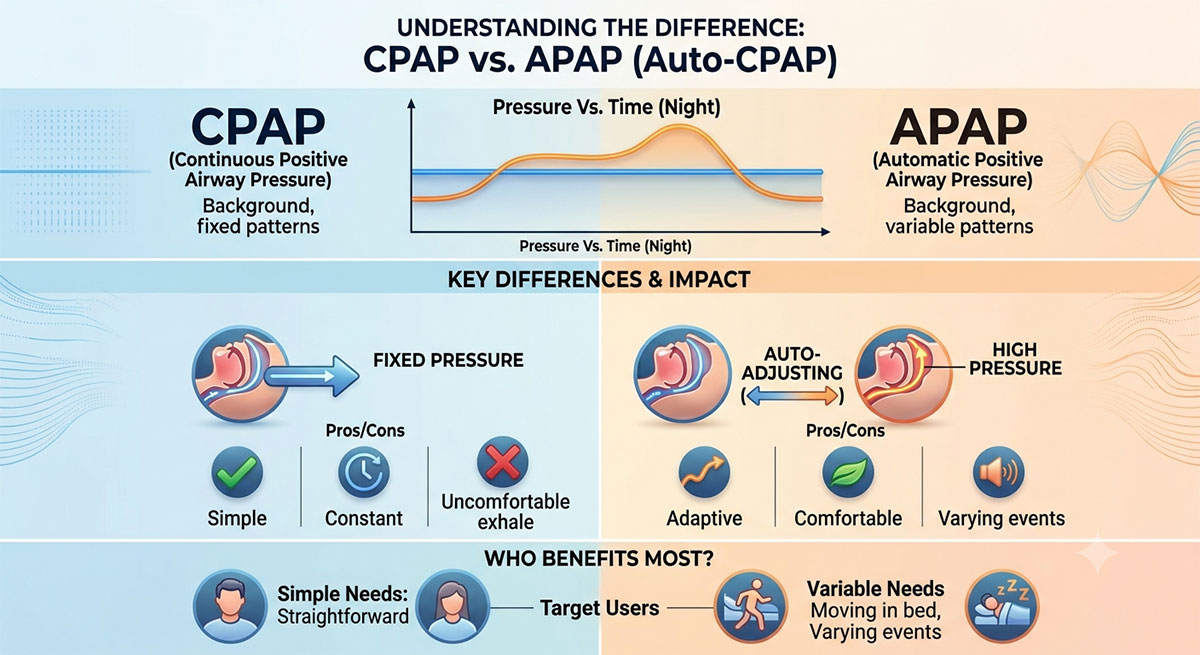
How It Works: A CPAP machine delivers air at a fixed, continuous pressure level all night long. This specific pressure setting is determined by a sleep physician based on a sleep titration study or a doctor’s prescription.
-
The Experience: Whether you are in light sleep, deep REM sleep, sleeping on your side, or flat on your back, the pressure stays completely constant.
-
The Pros: Simple, reliable, and predictable. There are no sudden changes in pressure that might startle a light sleeper.
-
The Cons: Breathing out against constant, fixed pressure can feel challenging or uncomfortable for some users, especially if their required prescription pressure is high.
What Is APAP? (Automatic Positive Airway Pressure)
APAP, often referred to as Auto-CPAP, is a more modern, adaptive approach to sleep therapy.
-
How It Works: Instead of a single fixed number, an APAP machine is set with a pressure range (a minimum and a maximum limit). Built-in sensors and algorithms monitor your breathing pattern continuously on a breath-by-breath basis.
-
The Experience: If the machine detects increased resistance, snoring, or an airway blockage, it automatically increases the pressure to keep the airway clear. Once normal breathing stabilizes, or when you switch to a sleep position with less resistance, the machine lowers the pressure back down.
-
The Pros: Highly flexible. Your airway resistance naturally fluctuates depending on sleep stage, body position, alcohol consumption, or nasal congestion. APAP delivers only as much pressure as you need at any given moment, making exhaling easier during periods of lower pressure.
-
The Cons: The algorithm’s pressure adjustments can occasionally wake very sensitive or light sleepers. APAP machines also tend to be slightly more expensive.
CPAP vs. APAP: Side-by-Side Comparison
| Feature | CPAP (Continuous PAP) | APAP (Automatic PAP) |
| Pressure Delivery | Single fixed pressure setting | Dynamic range (auto-adjusts) |
| Breath-by-Breath Response | No (remains static) | Yes (adapts in real time) |
| Exhale Ease | Can feel rigid without pressure-relief settings | Generally easier during low-pressure phases |
| Suitability for Allergies/Congestion | Fixed; does not adjust for seasonal blockage | Automatically increases pressure when congested |
| Flexibility | Set to one mode only | Most APAP units can also run in fixed CPAP mode |
Which Option Is Best for You?
The right choice ultimately comes down to your personal health profile, sleep habits, and physician recommendation:
-
Consider CPAP if: You require high, consistent pressure to prevent severe airway collapse, prefer a completely steady airflow rhythm without fluctuations, or want a straightforward, budget-conscious setup.
-
Consider APAP if: You tend to move around frequently in your sleep, experience fluctuating airway obstruction (e.g., allergies, alcohol use, sleeping on your back vs. side), or struggle with the feeling of exhaling against constant high pressure.
Most modern APAP devices offer dual functionality, meaning they can be switched to standard fixed CPAP mode if your doctor determines that is best. Always consult your sleep specialist or pulmonologist to review your sleep study results and determine the precise therapy settings for your needs.