What to Expect in a Sleep Study
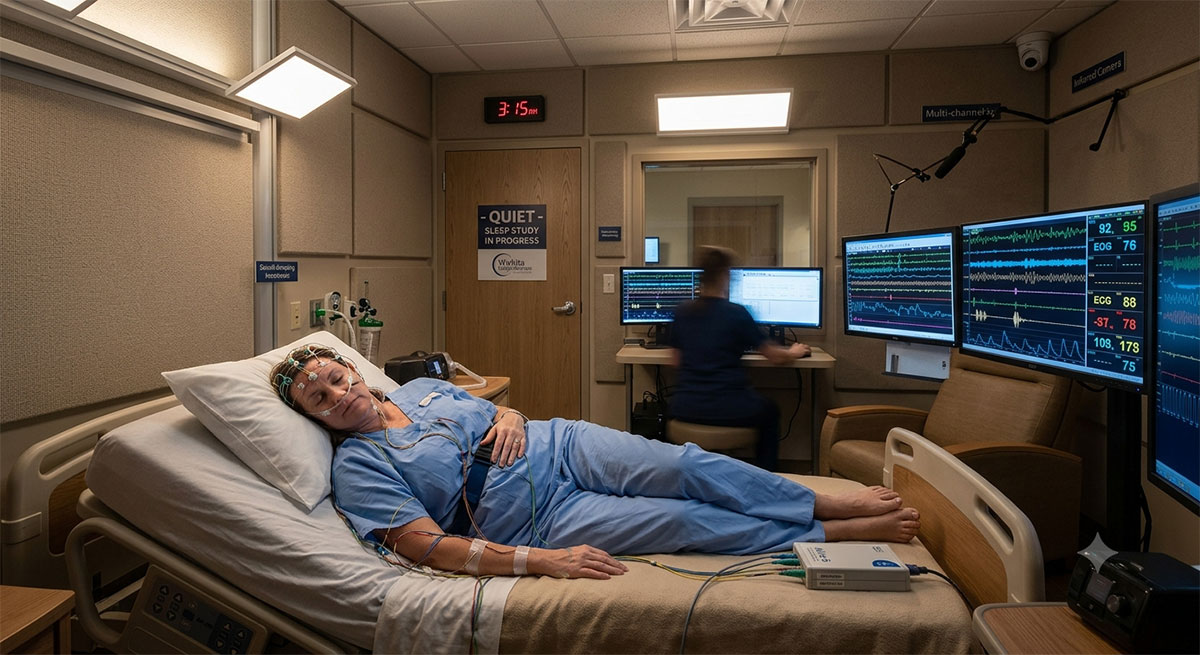
When sleep apnea is suspected, a sleep study is often recommended. This test provides detailed, comprehensive information about your sleep patterns and helps doctors understand exactly what happens to your body during the night.
What a Sleep Study Measures
During a sleep study, multiple data channels record key physiological signals while you sleep. These include blood oxygen levels, airflow through your nose, chest movement, muscle activity, eye movement, and brain waves. To capture this information, small electrodes and sensors are placed on your head, face, and chest—similar to what you might experience during a routine EKG.
Inside the Sleep Lab Environment
Most sleep studies take place in a specially equipped room called a sleep lab, located in a hospital or sleep clinic. You’ll be asked to bring your usual nighttime items so you can feel as comfortable as possible. When you arrive, the technician will explain the entire process and answer any questions you may have. The procedure is painless, low-risk, and designed to be as relaxing as possible.
Movement Limitations and Comfort Considerations
The only minor inconvenience is the presence of several sensors and wires, which may limit your movement slightly. Once you’re in bed, the sensors are connected to recording equipment located in an adjacent room so you won’t be disturbed by its operation. If you need to get up at any point, the technician can pause the study and disconnect you within a minute.
Even if you don’t sleep through the entire night, most people with sleep apnea fall asleep quickly due to chronic sleep deprivation, and the study usually gathers enough data for an accurate diagnosis. A camera and microphone also monitor your sleep position, movements, and sounds, allowing these observations to be matched with the recorded physiological data.
After the Sleep Study: Scoring and Review
When the study is finished, all sensors are removed and you’re free to go home. Within a day or two, your results will be scored and reviewed by a sleep specialist. If the study confirms sleep apnea, your doctor will recommend the most appropriate treatment based on the severity of your condition, your medical history, insurance coverage, and personal preferences.
Home sleep studies have expanded access to sleep-disorder evaluation and are now widely used in primary care, cardiology, and pulmonary practices.