Home Sleep Study for Sleep Apnea
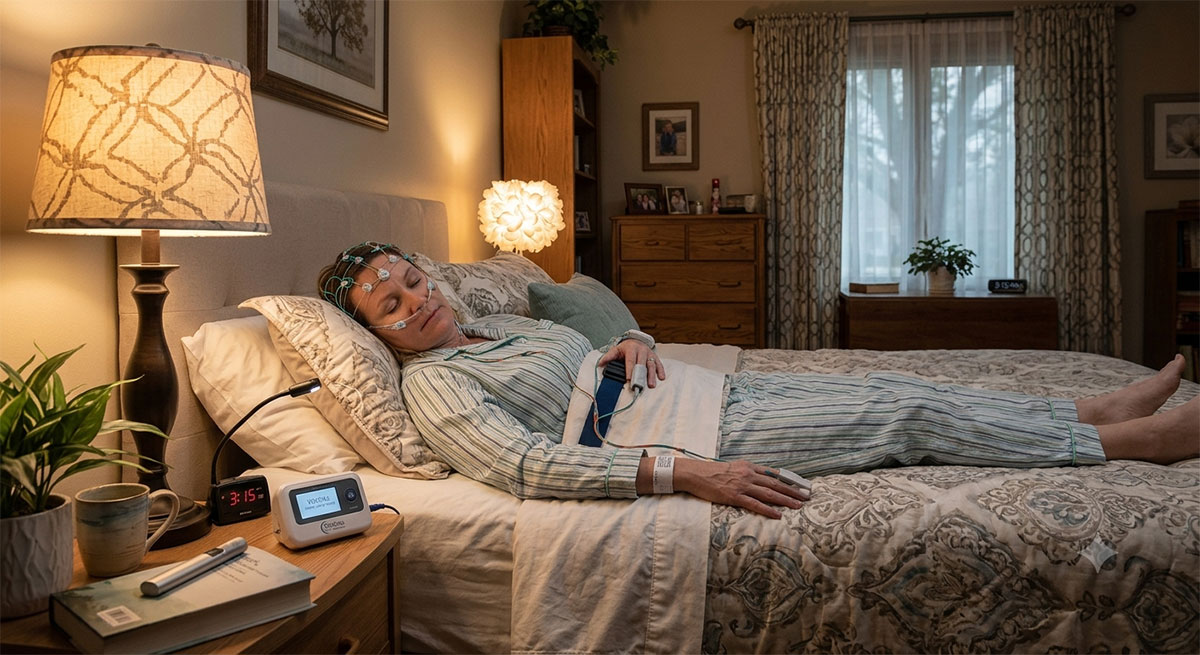
A home sleep study, also known as home sleep apnea testing (HSAT), is a diagnostic procedure used to evaluate patients for obstructive sleep apnea (OSA) in the comfort of their own home. HSAT provides an evidence-based alternative to in-laboratory polysomnography for appropriately selected patients and has become an integral component of modern sleep-medicine practice.
Purpose of a Home Sleep Study
The primary objective of HSAT is to document abnormal respiratory events during sleep, including:
- Apneas (complete cessation of airflow)
- Hypopneas (partial reduction in airflow accompanied by oxygen desaturation or arousal)
- Snoring and airflow limitation
- Oxygen desaturation patterns
HSAT is most effective in patients with a high pre-test probability of moderate to severe OSA and without significant comorbid conditions that require full polysomnographic evaluation.
What the Test Measures
Although HSAT does not capture the full range of physiologic data obtained in a sleep laboratory, it reliably records the key respiratory parameters needed to diagnose OSA. Typical measurements include:
- Nasal airflow via a cannula
- Respiratory effort using chest and abdominal belts
- Blood oxygen saturation
- Heart rate
- Snoring intensity
- Body position
Some devices may also include actigraphy or limited EEG surrogates, but HSAT does not measure sleep stages.
How the Home Sleep Study Is Performed
Patients receive a portable monitoring device from their sleep clinic or provider. Instructions are given in person or through written and video materials. The setup typically involves:
- Applying a nasal cannula to measure airflow
- Securing respiratory belts around the chest and abdomen
- Placing a pulse oximeter on a finger
- Activating the device before sleep
The equipment is designed to be minimally intrusive, allowing patients to sleep in their usual environment. This can improve comfort and may yield more representative sleep data compared to laboratory conditions.
Advantages of Home Sleep Testing
HSAT offers several clinical and practical benefits:
- Convenience for patients who prefer testing at home
- Lower cost compared to in-lab polysomnography
- Faster access to diagnostic evaluation
- More natural sleep environment, which may reduce first-night effects
- High diagnostic accuracy for uncomplicated OSA
Limitations and Considerations
Despite its usefulness, HSAT has important limitations:
- It does not assess sleep stages or detect non-respiratory sleep disorders
- It may underestimate OSA severity due to lack of EEG-based sleep time
- It is not recommended for patients with:
- Significant cardiopulmonary disease
- Neuromuscular disorders
- Chronic opioid use
- Suspected central sleep apnea
- Complex parasomnias or insomnia
- Technical failures can occur, requiring repeat testing
After the Study
Once the device is returned, the recorded data are downloaded and scored by trained sleep technologists. A board-certified sleep physician reviews the results and provides a formal interpretation. If OSA is diagnosed, treatment options may include:
- CPAP therapy (first-line treatment)
- Oral appliance therapy
- Positional therapy
- Weight management
- Surgical interventions when appropriate
The choice of therapy depends on disease severity, patient preference, anatomical considerations, and insurance coverage.
Clinical Significance
Home sleep studies have expanded access to sleep-disorder evaluation and are now widely used in primary care, cardiology, and pulmonary practices. When applied appropriately, HSAT provides a reliable, efficient, and patient-centered method for diagnosing obstructive sleep apnea.