Can CPAP Reduce Nighttime Urination?
Nighttime urination (nocturia) — getting up two, three, even four times a night — is one of the most frustrating issues men deal with as they get older. Most assume it’s only the prostate. But there’s another major player that often gets overlooked:
Sleep apnea.
And when obstructive sleep apnea is treated with CPAP, urinary symptoms can improve dramatically and reduce nighttime urination. Not because CPAP shrinks the prostate, but because it stops a chain reaction inside the body that makes the kidneys produce excess urine at night.
Let’s break it down.
Why Sleep Apnea Causes Frequent Nighttime Urination
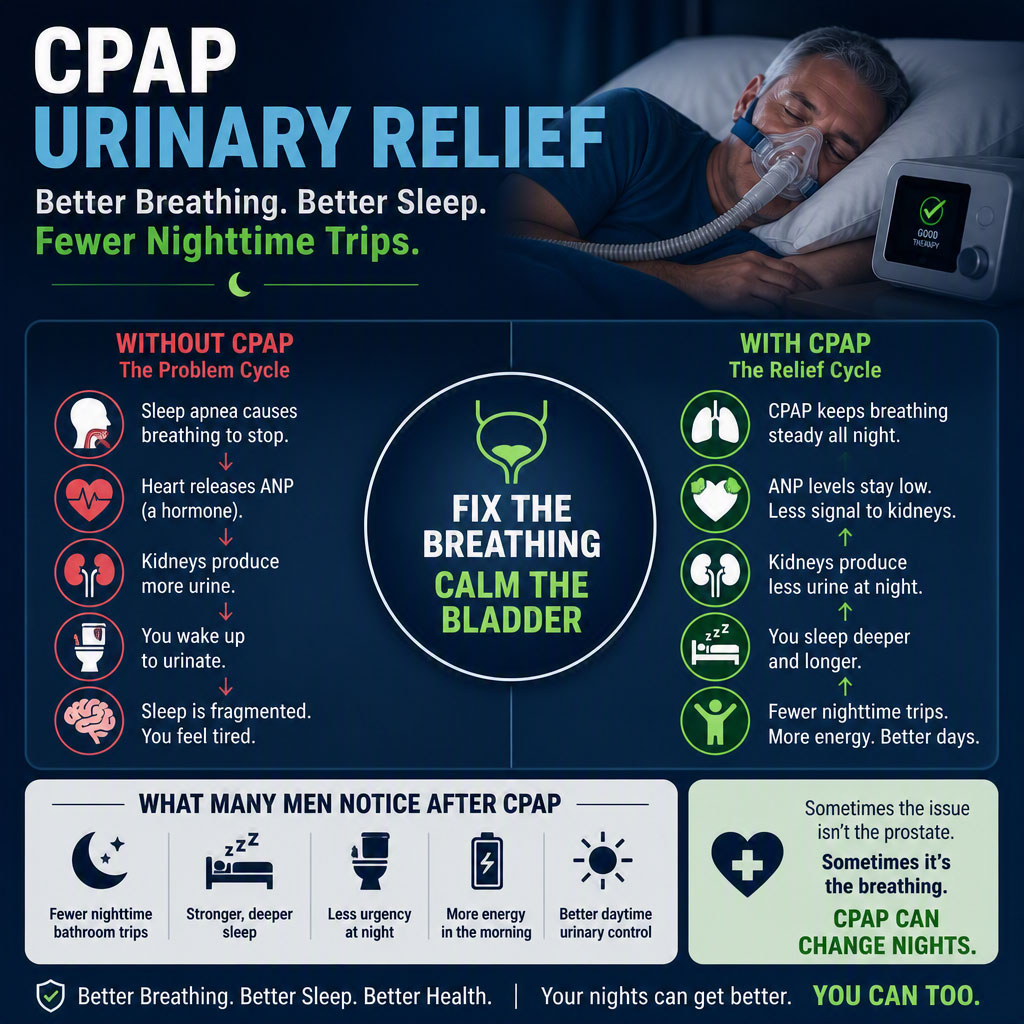
During untreated obstructive sleep apnea, repeated breathing pauses create pressure changes inside the chest. Increased chest pressure comes from the repeated struggle to breathe against a blocked airway. When the throat collapses, the lungs try to pull air in but can’t, creating a strong “vacuum effect” inside the chest. This negative pressure forces the heart and diaphragm to work harder, straining the cardiovascular system and disrupting normal blood flow. Over time, these pressure swings can trigger the release of atrial natriuretic peptide (ANP), a hormone that tells the kidneys to produce more urine and adds stress to the heart — all triggered by the body’s fight to breathe during sleep. As a result, many people wake multiple times during the night to urinate.
ANP tells the kidneys: “Make more urine — now.”
This is why men with perfectly normal prostates can still wake up multiple times a night to pee. The issue isn’t the bladder — it’s the breathing. Oxygen deprivation in sleep apnea happens when the airway repeatedly collapses or becomes blocked during sleep. Each time breathing stops, oxygen levels in the blood drop, forcing the body to jolt awake to reopen the airway. These cycles can occur dozens of times per hour, preventing deep, restorative sleep and straining the heart and lungs. Once CPAP therapy keeps the airway open, ANP production often decreases, reducing nighttime urination in many patients.
What Happens to Nighttime Urination after Starting CPAP Therapy?
1. CPAP Stops the ANP Surge
When breathing stays steady, the heart no longer dumps ANP into the bloodstream. Less ANP – less urine production – fewer nighttime trips.
Many men report going from 3–4 trips per night to 0–1 once CPAP becomes consistent.
2. CPAP Helps You Stay Asleep
Sleep apnea fragments sleep. You wake up repeatedly — sometimes without realizing it — and once you’re awake, you decide to pee “since I’m up anyway.”
CPAP stabilizes sleep cycles. If you don’t wake up, you don’t get up.
3. CPAP Reduces Inflammation and Stress Hormones
Poor oxygen levels increase inflammation throughout the body. Inflammation can irritate the bladder and increase urgency. Dream Sleep Repository reports, consistent CPAP use measurably lowers inflammatory proteins in the bloodstream, freeing up immune resources to focus on real threats rather than constant internal stress. As sleep quality improves, cortisol levels return to healthy patterns, allowing your immune system to respond appropriately to infections while maintaining proper regulation.
Better oxygen – calmer bladder – fewer interruptions.
4. CPAP Improves Blood Pressure Swings
Apnea causes spikes in nighttime blood pressure, which affects kidney filtration. CPAP smooths those swings, reducing nighttime urine production.
5. CPAP Helps Distinguish BPH From Apnea
If urinary symptoms improve with CPAP, apnea was likely a major contributor. If symptoms don’t improve, that’s when healthcare professionals often look more closely at prostate-related causes.
What Men Commonly Notice After Starting CPAP
- Fewer nighttime bathroom trips
- Stronger, deeper sleep
- Less nighttime urgency
- More energy in the morning
- Better daytime urinary control (if apnea was part of the problem)
It’s one of those “hidden benefits” of CPAP that most people never hear about — but it can change a man’s nights completely.
Why This Matters
Nighttime urination isn’t just annoying. It affects sleep, energy, mood, and overall health. And while BPH is common, it’s not always the main culprit.
Sometimes the issue isn’t the prostate at all. Sometimes it’s the breathing.
If you’re waking up several times every night to use the bathroom—and you also snore, gasp during sleep, or wake feeling exhausted—it may be time to talk with your healthcare provider about being evaluated for sleep apnea. Identifying the underlying cause can improve both your sleep and your overall health.