Does Weight Loss Help Sleep Apnea? What Science Says
If you have been diagnosed with Obstructive Sleep Apnea (OSA), you have likely heard your healthcare provider mention weight loss as part of your overall care plan. Excess body weight is one of the most prominent risk factors for developing sleep apnea, leading many patients to ask a crucial question: Can losing weight actually resolve or significantly improve sleep apnea?
The short answer is yes—weight loss frequently reduces the severity of sleep apnea, and in some mild-to-moderate cases, it can resolve symptoms entirely. However, the connection between body composition, airway structure, and sleep quality involves several physiological factors.
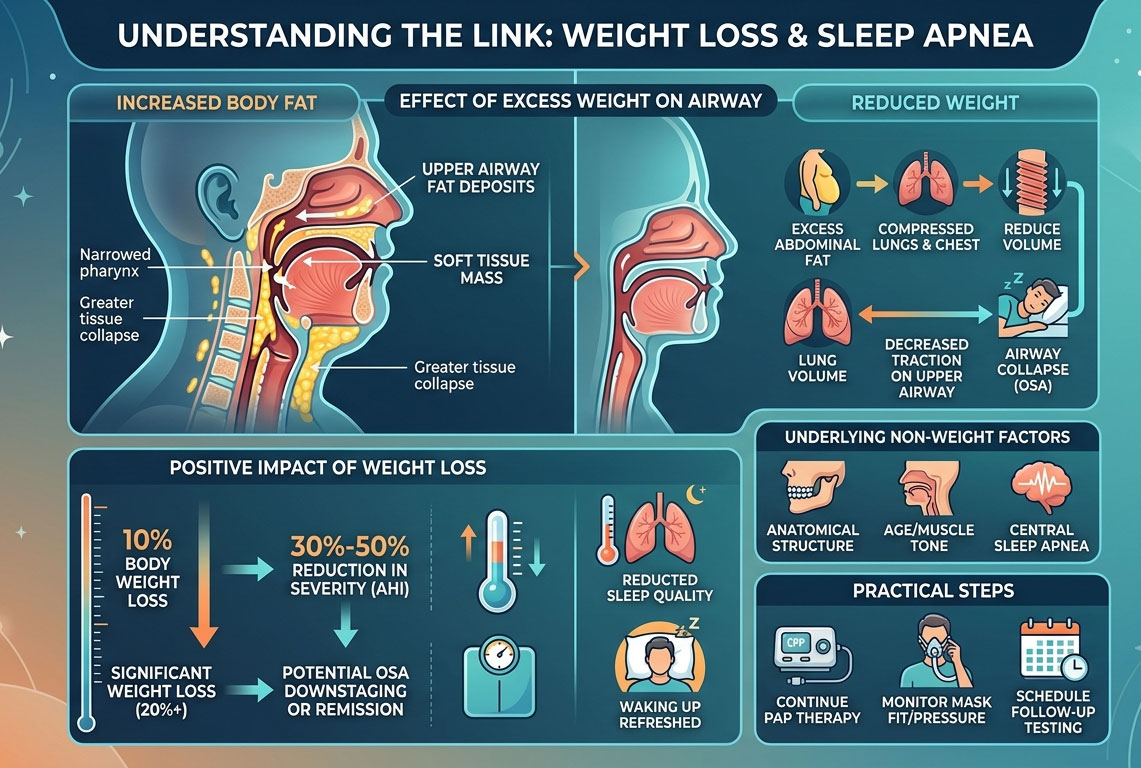
The Biological Link Between Weight and Sleep Apnea
Obstructive sleep apnea occurs when the muscles in the back of the throat relax during sleep, causing tissue to collapse inward and block the upper airway.
Excess body fat impacts this mechanism in two distinct ways:
-
Upper Airway Fat Deposits: Fatty tissue accumulates around the neck, throat, and tongue. These extra deposits narrow the inner diameter of the pharynx and increase soft-tissue mass. When airway muscles relax during sleep, this added weight pushes downward, making collapse far more likely.
-
Abdominal Fat and Lung Volume: Excess weight around the midsection compresses the chest cavity and lungs. Reduced lung volume decreases the structural traction that normally keeps the trachea and upper airway taut, leaving it prone to collapse.
How Much Does Weight Loss Improve Sleep Apnea?
Clinical research shows a direct correlation between weight reduction and a drop in the Apnea-Hypopnea Index (AHI)—the metric used to measure how many breathing pauses occur per hour of sleep.
-
10% Body Weight Loss: Studies indicate that losing just 10% of total body weight can lead to a 30% to 50% reduction in AHI severity for many individuals.
-
Significant Weight Loss (20%+): For patients who undergo substantial weight loss (such as through intensive clinical lifestyle interventions, medical weight loss treatments, or bariatric surgery), moderate-to-severe OSA can often be downstaged to mild OSA, or in some cases, put into clinical remission.
In randomized controlled trials reported by National Institutes of Health with up to 4-year follow-up indicated that weight loss is associated with decreased OSA severity with an average change in AHI of 0.78 events/h for every kilogram of weight lost, and that a small proportion of patients can achieve remission of OSA (AHI?<?5 events/h).
Why Weight Loss Isn’t Always a Complete Solution
While weight loss consistently improves airway dynamics, it may not completely eliminate sleep apnea for everyone due to other underlying contributing factors:
-
Anatomical Structure: Jaw alignment, a large tongue, enlarged tonsils, or a narrow upper palate can cause airway collapse regardless of body weight.
-
Age and Muscle Tone: As people age, tissue elasticity in the throat decreases, increasing airway tissue laxity regardless of body fat percentage.
-
Central Sleep Apnea: Central sleep apnea is driven by brain-to-muscle signaling issues rather than physical airway blockages, meaning body weight plays little to no role in its management.
The Cycle: Sleep Apnea and Weight Loss
One of the primary challenges patients face is that sleep apnea itself actively interferes with weight loss efforts:
| Impact of Sleep Apnea | Effect on Weight Management |
| Disrupted REM & Deep Sleep | Alters hunger hormones—increasing ghrelin (appetite driver) and lowering leptin (satiety signal). |
| Daytime Fatigue | Reduces physical activity levels and spontaneous daily movement. |
| Elevated Stress Response | Chronic night-time oxygen drops cause cortisol spikes, encouraging abdominal fat storage. |
Because of this interplay, physicians generally advise against stopping positive airway pressure (PAP) therapy while attempting to lose weight. Using continuous or automatic PAP therapy restores restful sleep, balances metabolic hormones, and supplies the daily energy needed to maintain an active lifestyle and nutritional plan.
Practical Steps for Management
If you are working toward improving sleep apnea through weight management, consider these standard guidelines:
-
Maintain Prescribed Therapy: Keep using your prescribed PAP device consistently. Addressing airway obstruction first creates the metabolic foundation required for effective weight loss.
-
Monitor Mask Fit and Pressure: As body composition shifts, you may notice changes in how your mask fits or experience air leaks if facial features slim down.
-
Schedule Follow-Up Testing: Never adjust prescription settings or discontinue therapy based on weight loss alone. Always consult a medical professional to perform an updated evaluation or titrate machine settings safely.