How to Find Reliable Acid Reflux Information
 If you’ve searched for acid reflux information online, you know the problem: one site says drink apple cider vinegar, the next says it will make it worse. One says it’s all diet, another says you need prescription drugs for life.
When you are dealing with daily heartburn, that burning pain from stomach acid washing up into your esophagus, you don’t need more confusion. You need clear, reliable information you can act on.
Here is how to sort the good from the bad, and what most reliable sources actually agree on.
Why There Is So Much Bad Information
Acid reflux, also called gastroesophageal reflux, affects an estimated 60 million Americans at least once a month. Because it’s so common, it’s also a huge business.
That creates 3 types of bad information:
1. The Miracle Cure Site: Claims one supplement, vinegar, or alkaline water will cure everyone. If it sounds too good to be true, it is.
2. The Drug-Only Site: Says lifestyle doesn’t matter and you will need pills forever. It ignores the role of diet, weight, and habits that you can control.
3. The Anonymous Forum: Real people sharing real stories, but anecdotal evidence is not science. What helped one person can hurt another.
No website, including this one, replaces a conversation with a healthcare professional who knows your history. Use online information to become better informed, so you can ask better questions and make better lifestyle choices.
5 Rules to Find Trustworthy Acid Reflux Information
Use this checklist before you trust any article:
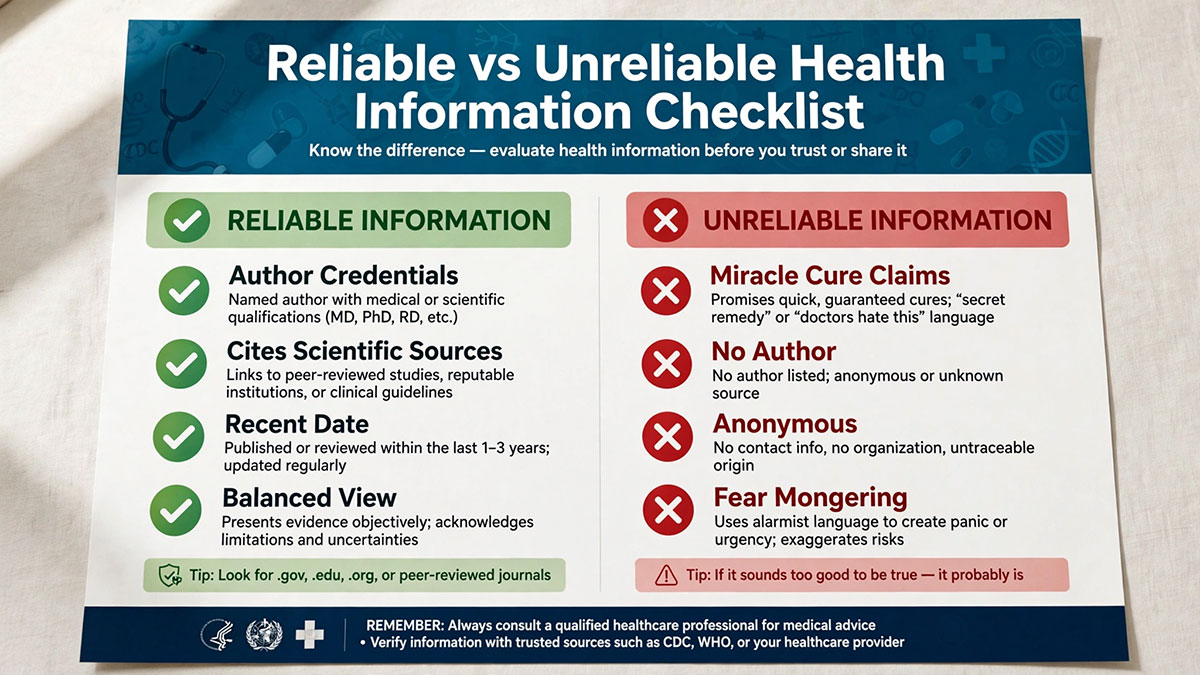
1. Who wrote it and when? Look for an author name, credentials, and a date updated in the last 12-18 months. Medical information changes fast.
2. Does it cite sources? Good articles link to places like the NIH, Mayo Clinic, or peer-reviewed studies, not just other blogs.
3. Does it acknowledge both sides? Reliable health information talks about lifestyle AND medical options. It does not claim drugs are always toxic or that diet alone cures everything.
4. Is it trying to scare you into buying? Be wary of pages that create panic about “tissue damage” and then immediately sell a proprietary cure.
5. Does it encourage personal responsibility? The best information, in our view at A Better Health Plan, empowers you to control what you can: what you eat, how you move, how you sleep, and your weight.
What Reliable Sources Agree On: Common Triggers
While every person is different, most gastroenterologists agree these factors make reflux worse:
1. Diet: High-fat fried foods, large meals, chocolate, peppermint, spicy foods, caffeine, alcohol, and carbonated drinks are common triggers.
2. Excess Weight: Extra weight around the abdomen increases pressure on the stomach, pushing acid upward.
3. Lifestyle Habits: Eating within 2-3 hours of bedtime, lying flat after meals, wearing tight clothing around the waist, and a very sedentary lifestyle.
4. Sleeping Position: Lying flat makes it easier for acid to travel. Many people find relief by raising the head of the bed 6-8 inches with a wedge, not just extra pillows.
Keeping a simple food and symptom diary for 7 days is one of the most reliable tools you can use. Write down what you ate, when you ate, and when symptoms hit.
Lifestyle Changes That Help Most People
These are not prescriptions, but they are the low-risk, common-sense steps that major clinics recommend first:
1. Eat Smaller, Earlier: 4-5 smaller meals instead of 2 large ones. Try not to eat 3 hours before bed.
2. Follow a Reflux-Friendly Diet: Focus on lean proteins, non-citrus fruits like bananas and melons, vegetables, oatmeal, and whole grains. Identify YOUR personal trigger foods from your diary.
3. Manage Weight: Even a 5-10% reduction in weight can significantly reduce symptoms for many overweight individuals.
4. Adjust Your Sleep: Raise the head of your bed on blocks or use a wedge. Sleep on your left side if you can.
5. Rethink Daily Habits: If you smoke, quitting helps. If you take NSAIDs like ibuprofen frequently, talk to your pharmacist about whether they could be contributing.
The Truth About Popular Home Remedies
Apple Cider Vinegar: Some people swear by it, others report it makes burning worse. There is no strong clinical evidence that it helps acid reflux, and because it is acidic, it can irritate the esophagus.
Baking Soda Water, Ginger, Aloe Vera: Similar story – lots of stories online, very limited human studies. Approach with caution and talk to your doctor first, especially if you have high blood pressure, kidney issues, or take daily medications.
Anecdotal evidence is interesting, but it is not proof.
When to Talk to a Doctor Promptly
Make an appointment and get professional advice if you have:
- Heartburn more than twice a week
- Difficulty swallowing, persistent nausea or vomiting
- Unintended weight loss
- A feeling of food stuck in your throat
- Symptoms that continue despite lifestyle changes
These could be signs of a more serious condition that needs medical evaluation.
FAQ: Quick Answers
Q: Can you cure acid reflux with diet alone?
A: Diet and lifestyle can greatly reduce symptoms for many people and are always the first step recommended by guidelines. Whether that is enough depends on the severity and cause, which requires a professional evaluation.
Q: What foods should I avoid with acid reflux?
A: The most common are fried/fatty foods, tomato-based sauces, citrus, chocolate, mint, garlic and onions, caffeine, and alcohol. Your personal triggers may be different – a food diary helps.
Q: Is sleeping on an incline really effective?
A: Yes, it is one of the best-supported lifestyle measures. Gravity helps keep stomach contents down. A foam wedge or bed risers works better than stacking pillows, which can strain your neck.
About This Article
Written by the research team at A Better Health Plan. Last updated: August 7, 2026. This article is for informational purposes only and is not medical advice. It is intended to help you make more informed lifestyle choices. Always consult with a qualified healthcare professional before making changes to your diet, supplements, or treatment plan.
Medical Disclaimer: Information on this site is not intended to diagnose, treat, cure, or prevent any disease. If you have a medical condition, consult your physician.