Sleep Apnea & High Blood Pressure: Don’t Ignore The Hidden Connection

Sleep apnea is more than a nighttime breathing problem—it’s a condition that can quietly strain your entire cardiovascular system. Many people first seek help because of loud snoring or daytime fatigue, but behind those symptoms may be a more serious issue: high blood pressure. Understanding how these two conditions interact is essential for protecting long-term health.
Sleep apnea can contribute to high blood pressure because repeated breathing interruptions trigger oxygen drops and activate the body’s stress response. Over time, this can make hypertension more difficult to control. Treating sleep apnea may help improve blood pressure in many patients as part of an overall treatment plan.
What Is Sleep Apnea?
Sleep apnea occurs when breathing repeatedly stops or becomes shallow during sleep. The most common form, obstructive sleep apnea (OSA), happens when the airway collapses or becomes blocked. Each pause in breathing forces the brain to jolt the body awake just enough to reopen the airway. These interruptions may last seconds, but they can occur dozens—or even hundreds—of times per night.
How Sleep Apnea Raises Blood Pressure
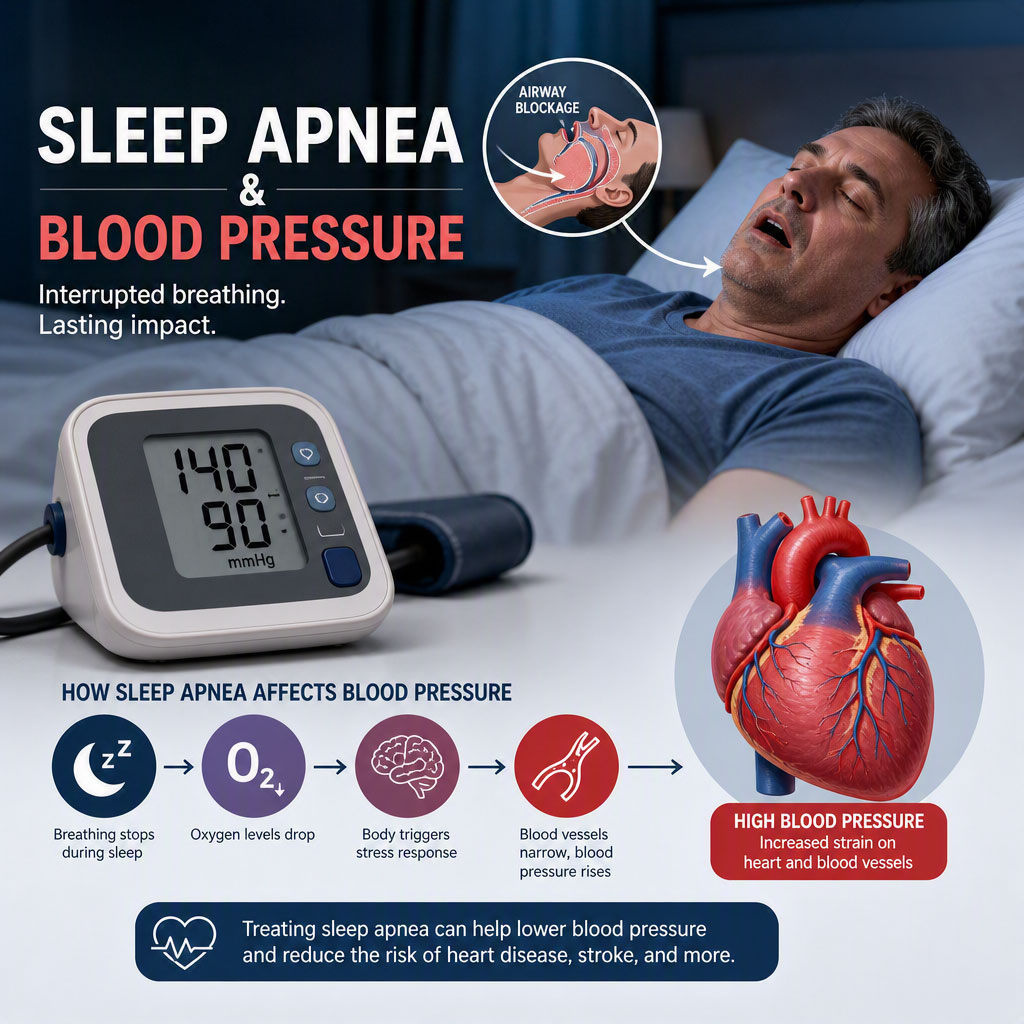
Every time breathing stops, oxygen levels drop. The body responds by releasing stress hormones, tightening blood vessels, and increasing heart rate. Over time, this repeated strain leads to persistent high blood pressure, also known as hypertension. According to Resmed, “Repeated oxygen drops and sympathetic surges that occur with untreated OSA make blood pressure harder to control even with blood pressure medications.”
Here’s what happens inside the body:
- Oxygen drops – the brain signals the body to wake up
- Stress hormones surge – adrenaline and cortisol rise
- Blood vessels constrict – increasing pressure
- Heart works harder – leading to long-term cardiovascular stress
This cycle repeats throughout the night, creating a constant “fight-or-flight” response that continues even during the day.
Why This Connection Matters
High blood pressure is one of the strongest risk factors for:
- Heart attack
- Stroke
- Heart failure
- Kidney disease
When sleep apnea goes untreated, hypertension often becomes more difficult to control—even with medication. Many patients discover that their blood pressure improves significantly once their sleep apnea is treated.
Signs You May Have Sleep Apnea
While loud snoring is a common symptom, sleep apnea can occur even without it. Other signs include:
- Pauses in breathing noticed by a partner
- Morning headaches
- Dry mouth
- Daytime sleepiness
- Difficulty concentrating
- Irritability or mood changes
If you have high blood pressure that remains elevated despite treatment, sleep apnea may be an underlying cause.
Getting Diagnosed
Sleep apnea is diagnosed through a sleep study, either in a sleep lab or at home using a portable device. These tests measure breathing patterns, oxygen levels, and other vital signs throughout the night. Once diagnosed, treatment options can be tailored to the severity of the condition.
Sleep Apnea Treatment Can Improve High Blood Pressure
The most effective treatment for obstructive sleep apnea is CPAP therapy, which uses gentle air pressure to keep the airway open during sleep. Many patients experience:
- Lower blood pressure
- Improved energy
- Better mood and concentration
- Reduced cardiovascular risk
Other treatments include oral appliances, positional therapy, weight management, and—in some cases—surgery.
The Bottom Line for Sleep Apnea and High Blood Pressure
Sleep apnea and high blood pressure often go hand-in-hand, and ignoring one can make the other worse. If you struggle with hypertension, daytime fatigue, or loud snoring, it may be time to consider whether sleep apnea is playing a role.
Addressing sleep apnea doesn’t just improve sleep—it can protect your heart, your brain, and your long-term health.