Why Sleep Apnea Increases Stroke Risk
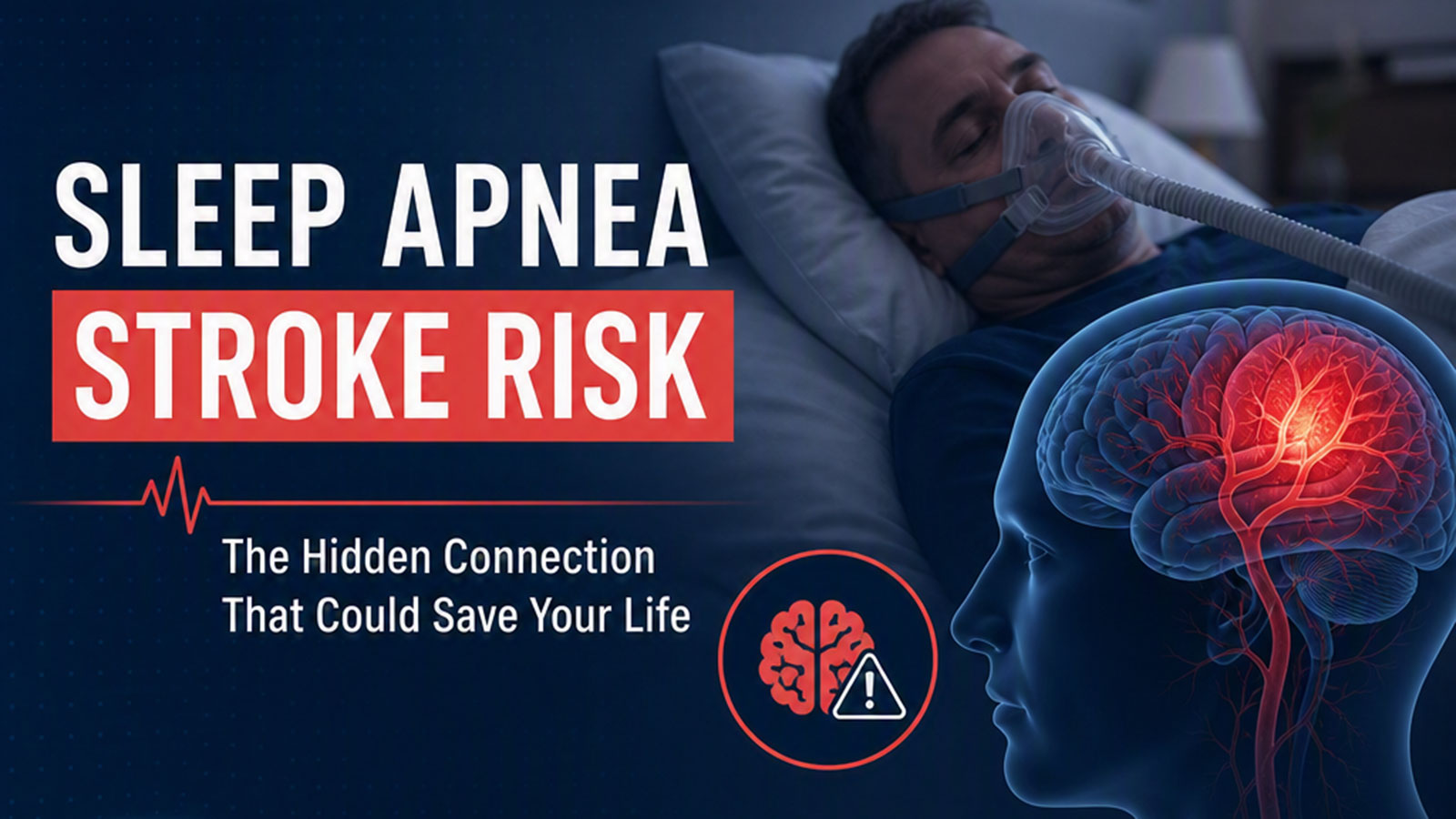
Sleep apnea is far more than loud snoring or restless nights—it’s a serious medical condition that can quietly damage the brain and cardiovascular system over time. In fact, multiple studies now confirm that obstructive sleep apnea (OSA) significantly increases the risk of stroke, even after adjusting for age, weight, smoking, diabetes, and other risk factors.
Sleep Apnea Is Shockingly Common Among Stroke Patients
Recent clinical reviews show:
- Up to two-thirds of stroke patients have sleep apnea after their event .
- A major meta-analysis found 72% of stroke patients have an apnea-hypopnea index (AHI) above 5, meaning clinically significant sleep apnea .
- Sleep apnea increases the risk of incident stroke by two- to three-fold in population studies .
These numbers reveal a powerful connection: sleep apnea is not just common after stroke—many patients likely had their stroke because of untreated apnea.
How Sleep Apnea Raises Stroke Risk
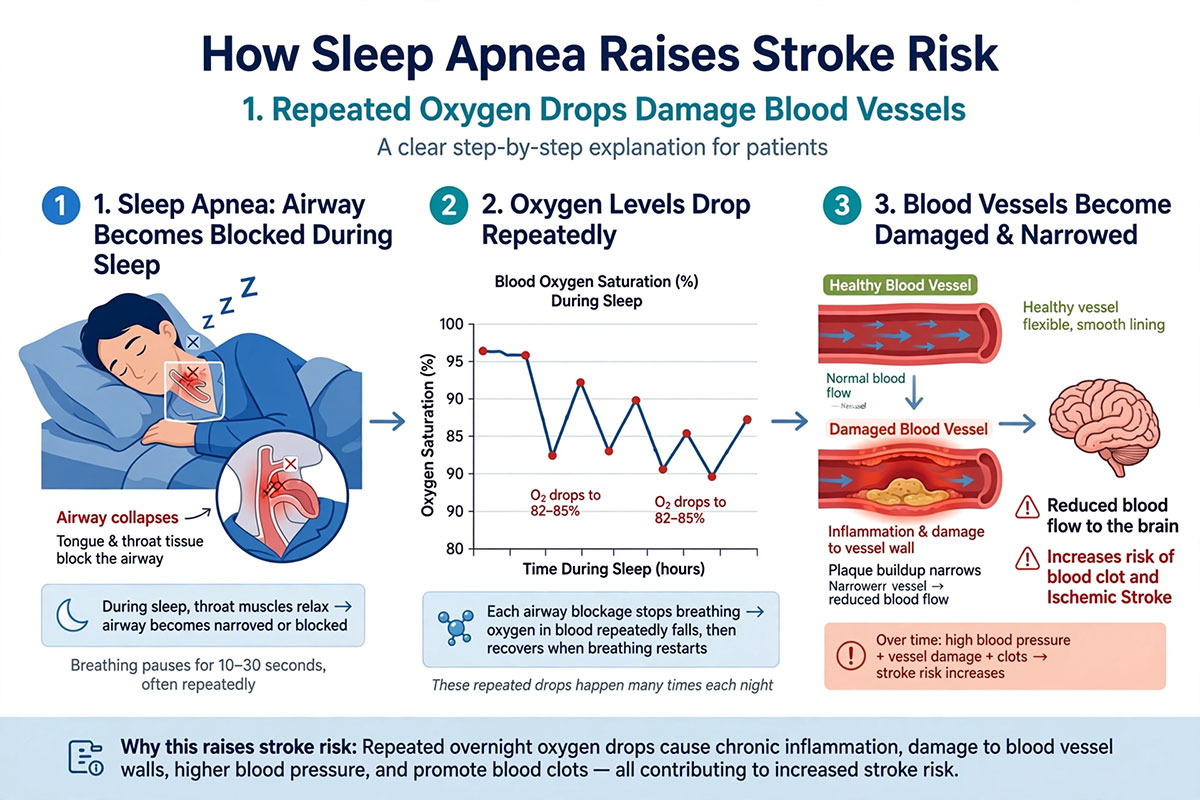
1. Repeated Oxygen Drops Damage Blood Vessels
During apnea episodes, airflow stops and oxygen levels fall. This “intermittent hypoxia” triggers:
- inflammation
- oxidative stress
- endothelial dysfunction (damage to blood vessel lining)
These changes accelerate atherosclerosis and make blood vessels more prone to blockage or rupture—two pathways to stroke.
2. Surges in Blood Pressure—Night After Night
Every apnea episode triggers a fight-or-flight response. The body releases stress hormones, causing:
- spikes in blood pressure
- increased sympathetic nervous system activity
- eventual sustained hypertension
Hypertension is the #1 modifiable stroke risk factor, and sleep apnea is one of its strongest drivers. Studies show sleep-disordered breathing predicts future hypertension even in otherwise healthy adults .
3. Increased Risk of Atrial Fibrillation
OSA dramatically increases the likelihood of developing atrial fibrillation (AFib)—a major cause of cardioembolic stroke. Research shows:
- Severe, untreated OSA is strongly linked to AFib and heart rhythm disturbances .
When AFib is present, blood clots can form in the heart and travel directly to the brain.
4. Harmful Swings in Carbon Dioxide Levels
Apnea causes CO2 to rise, dilating blood vessels. When breathing resumes, CO2 drops sharply, causing vasoconstriction. In people with vascular disease, these rapid shifts can reduce blood flow to vulnerable brain tissue and trigger ischemia .
5. Structural Strain on the Heart
Trying to breathe against a blocked airway creates large negative pressures in the chest. Over years, this contributes to:
- ventricular hypertrophy
- reduced stroke volume
- increased risk of arrhythmias
All of these raise stroke risk.
Sleep Apnea Also Worsens Stroke Recovery
Not only does sleep apnea increase the chance of having a stroke—it also makes recovery harder:
- Patients with OSA have longer hospital stays—by an average of 14 days .
- Untreated OSA is linked to poorer cognitive recovery, more depression, and reduced ability to perform daily activities.
- Nocturnal oxygen drops correlate with white matter damage on MRI, impairing brain healing after stroke .
The Good News: Treatment Helps
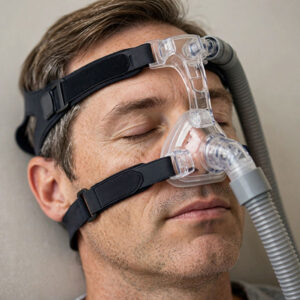 Continuous Positive Airway Pressure (CPAP) remains the gold standard. Studies show CPAP:
- improves cognitive and neurological recovery
- reduces daytime sleepiness
- may reduce long-term vascular complications
While some trials show mixed results for preventing recurrent stroke, the overall evidence strongly supports treating OSA as a major vascular risk factor.
Final Thoughts
Sleep apnea is one of the most overlooked—and most dangerous—contributors to stroke. With millions of Americans undiagnosed, the risk remains hidden until a catastrophic event occurs.
If you snore loudly, wake up gasping, feel excessively tired, or have been told you stop breathing at night, a sleep study could be lifesaving. Identifying and treating sleep apnea is one of the most powerful steps you can take to protect your brain, your heart, and your future.