What Is Sleep Apnea? Symptoms, Causes, Diagnosis & Treatment
Do you feel tired all day? Do you snore at night? Is your doctor struggling to get your blood pressure under control? If any of these sound familiar, you may be dealing with Sleep Apnea—also known as Obstructive Sleep Apnea (OSA).
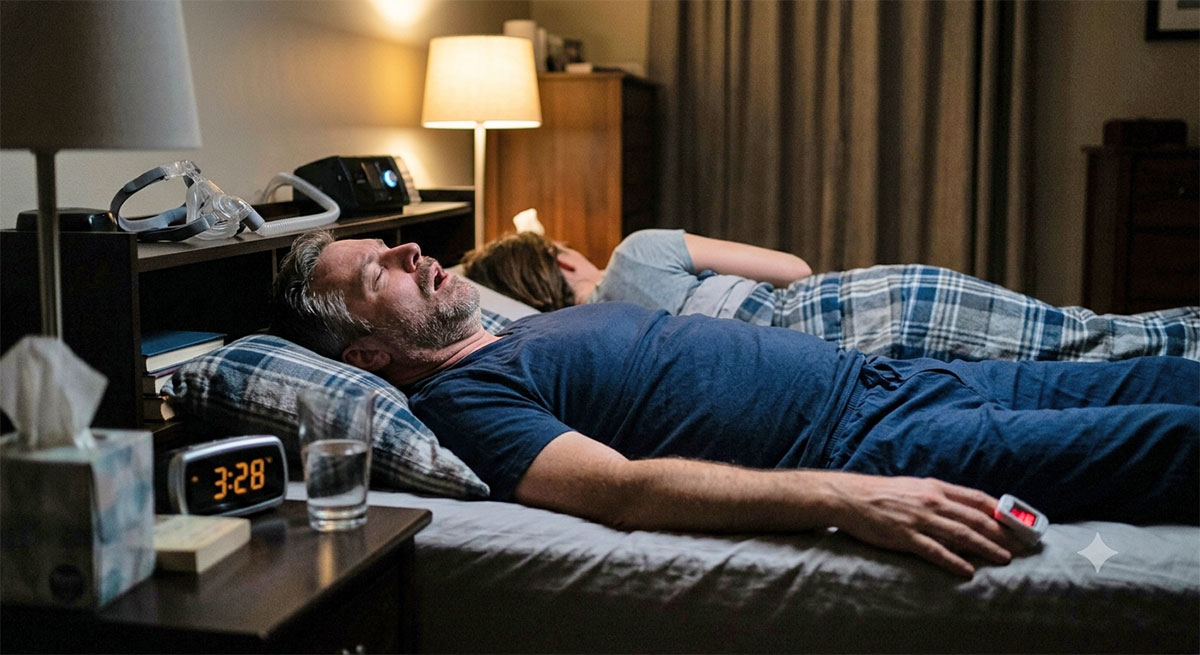
What Is Sleep Apnea?
Sleep apnea happens when breathing repeatedly slows down or stops during sleep. This usually occurs because the airway collapses somewhere between the nostrils and the back of the tongue. Think of trying to drink a thick milkshake through a straw that keeps collapsing—that’s similar to what happens in the airway.
For many people, this tendency for the airway to collapse is inherited and begins in childhood. During the day, strong muscle tone and active brain monitoring keep the airway open. But at night, throat muscles relax and the brain isn’t as vigilant. As you inhale, the airway can narrow or close completely. When this happens:
- Your body struggles to pull in air
- Your brain must “wake up” briefly to reopen the airway
Why Sleep Apnea Disrupts Your Sleep
These repeated awakenings fragment your sleep. They’re so brief you may not remember them, yet someone with OSA can wake more than 30 times per hour and still believe they slept through the night.
Because restorative sleep must be deep and continuous, this fragmentation can lead to:
- Daytime sleepiness
- Memory issues
- Trouble concentrating
- Irritability and emotional swings
- Slower reaction times
- A significantly higher risk of car accidents
The Impact on Your Heart
Constant nighttime breathing struggles put stress on the heart and blood vessels. Over time, this increases the risk of:
- High blood pressure
- Heart disease
- Stroke
Social Effects
Snoring—often a symptom of sleep apnea—can disturb others. One study found that when a person treats their sleep apnea, their sleep partner gains the equivalent of one extra hour of sleep per night.
Who Gets Sleep Apnea?
Many people assume only overweight men who snore loudly get sleep apnea. In reality:
- Sleep apnea can occur without snoring
- Thin people can have it
- Women can have it
- Children can have it
In short, anyone can have sleep apnea.
According to the American Medical Association, “Interrupted breathing during sleep affects an estimated 30 million people in the U.S., yet many people don’t realize they have obstructive sleep apnea until a partner notices loud snoring, gasping or restless nights. In fact, only 6 million are diagnosed with sleep apnea, leaving 80% unaware they have the condition.”
How Do You Find Out?
Start by seeing your primary care doctor, or go directly to a sleep specialist if your insurance allows. If sleep apnea is suspected, you’ll be referred for a sleep study or a full sleep evaluation.
Treatment Options
There are four main approaches:
1. CPAP (Continuous Positive Airway Pressure)
The most effective treatment. A CPAP machine uses a mask and gentle airflow to keep the airway open. Every patient diagnosed with sleep apnea should try CPAP before considering other options.
2. Surgery
Various procedures—from nasal repairs to jaw reconstruction—can help. Your doctor can determine whether surgery is appropriate.
3. Oral Appliances
A dentist or orthodontist can create a device that moves the lower jaw forward, pulling the tongue away from the back of the throat. This works well when the obstruction occurs behind the tongue. Treatment should be coordinated between your sleep doctor and dental specialist.
4. Behavioral Changes
These are usually the least effective on their own but can help:
- Weight loss
- Sleeping on your side
- Avoiding alcohol and sedatives before bed
Final Thoughts
Sleep apnea is progressive and often worsens with age. Weight gain, alcohol, and sedatives can make it more severe. Although no treatment is perfect, each option can improve sleep quality and reduce serious health risks like heart attack and stroke.
If you suspect you have sleep apnea, talk to your doctor or visit a sleep center. Addressing it now could be one of the most important health decisions you make.